WAR MACHINE
PERSONAL WORK // DESIGN, MODELING, TEXTURING, RIGGING, ANIMATION, RENDERING
AWARDS // ZBRUSH CENTRAL TOP ROW
PUBLICATIONS // ISSUE 2015-03 DIGITAL PRODUCTION, ISSUE 202 3D WORLD MAGAZINE
SOFTWARE // ZBRUSH, 3DS MAX, ADOBE AE, ADOBE PS


CASE STUDY
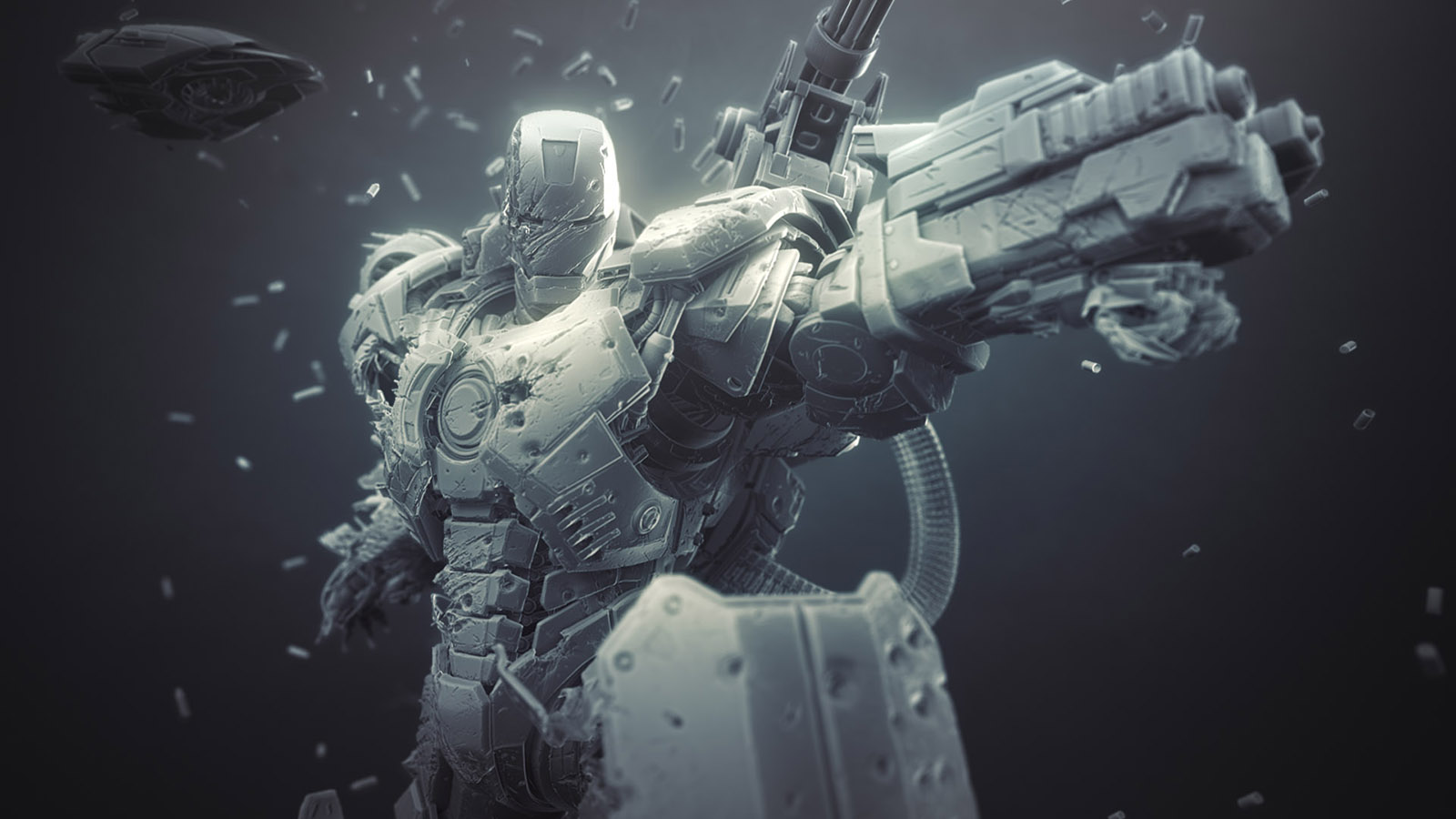
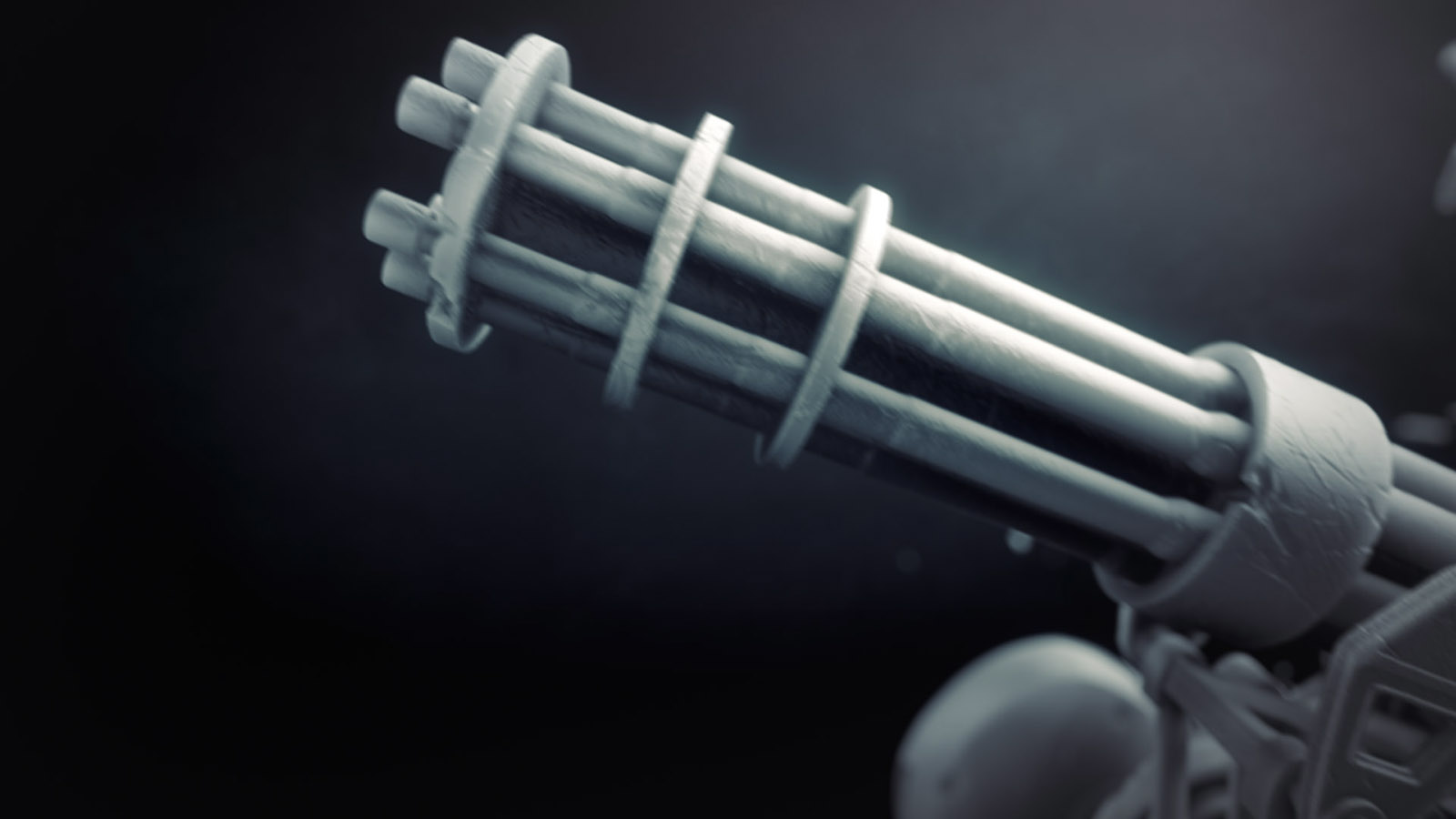
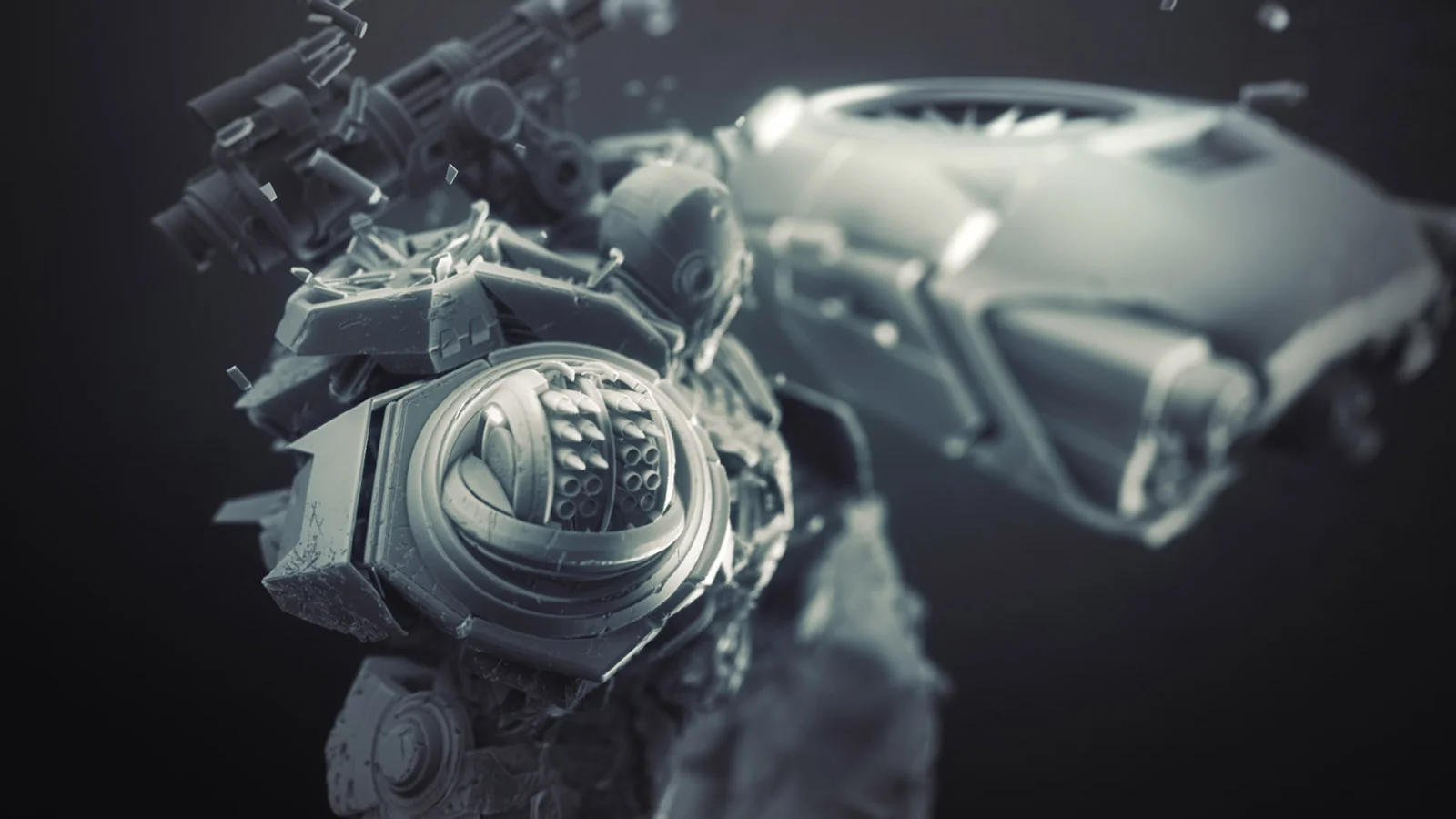
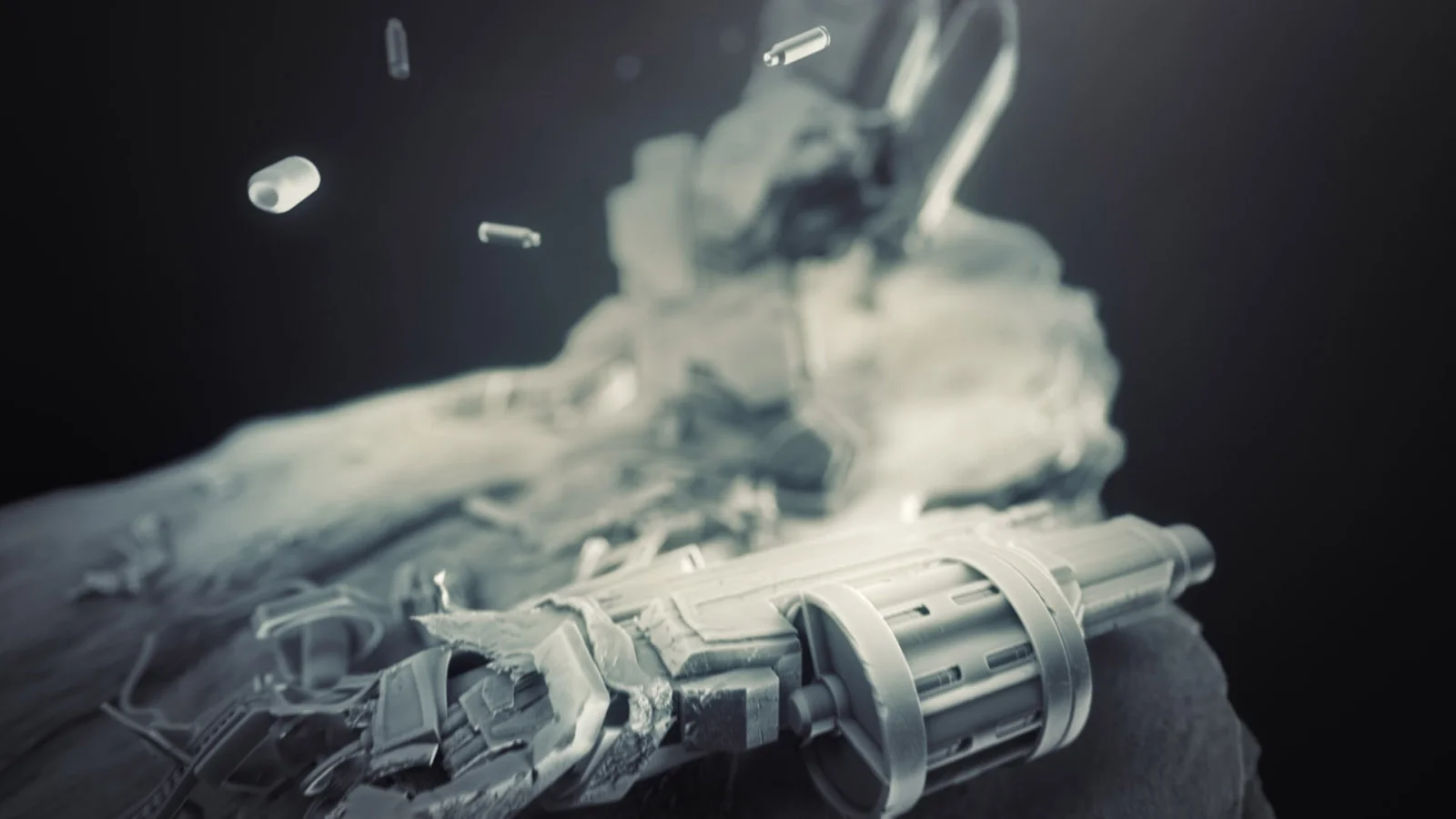
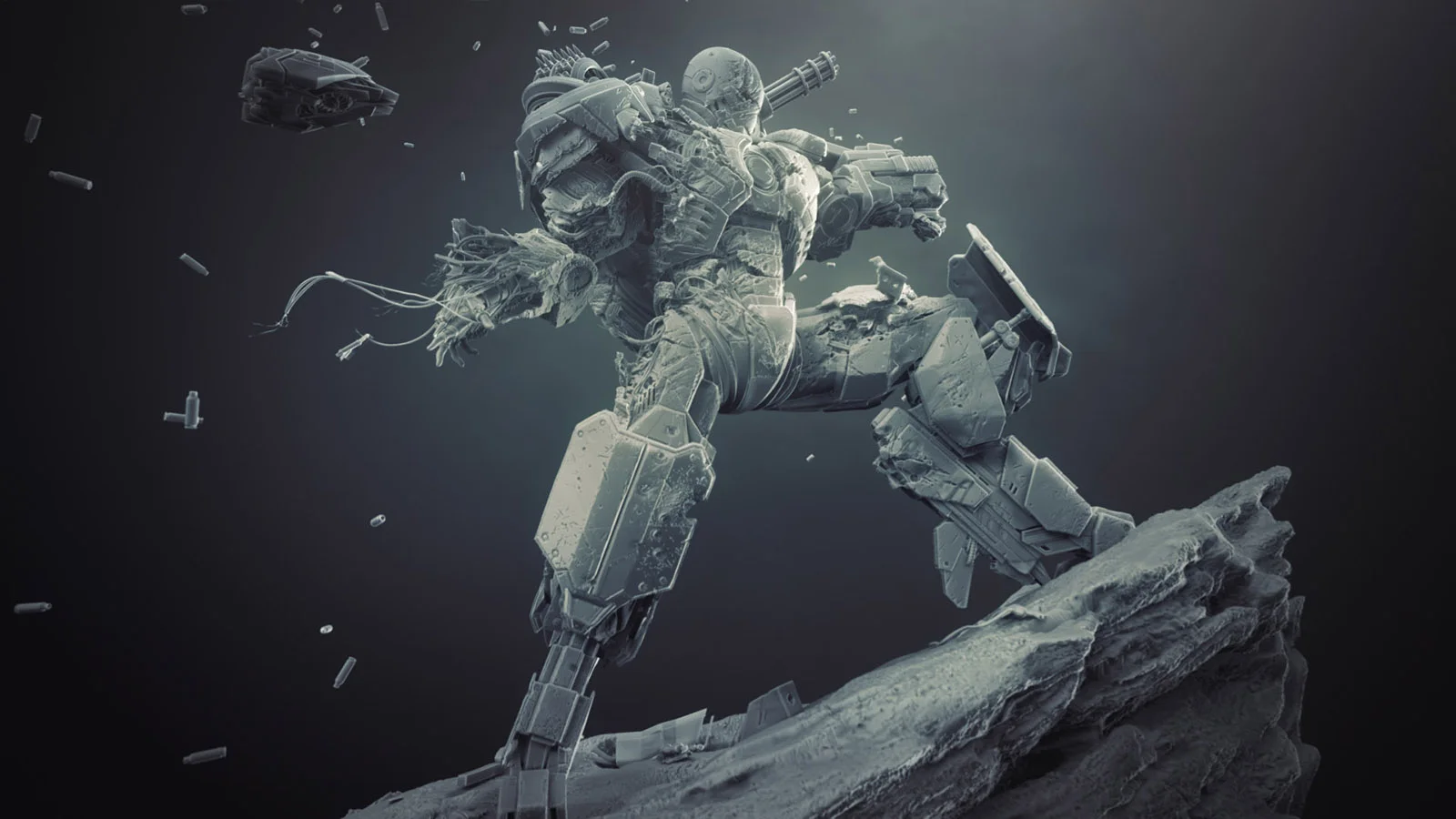
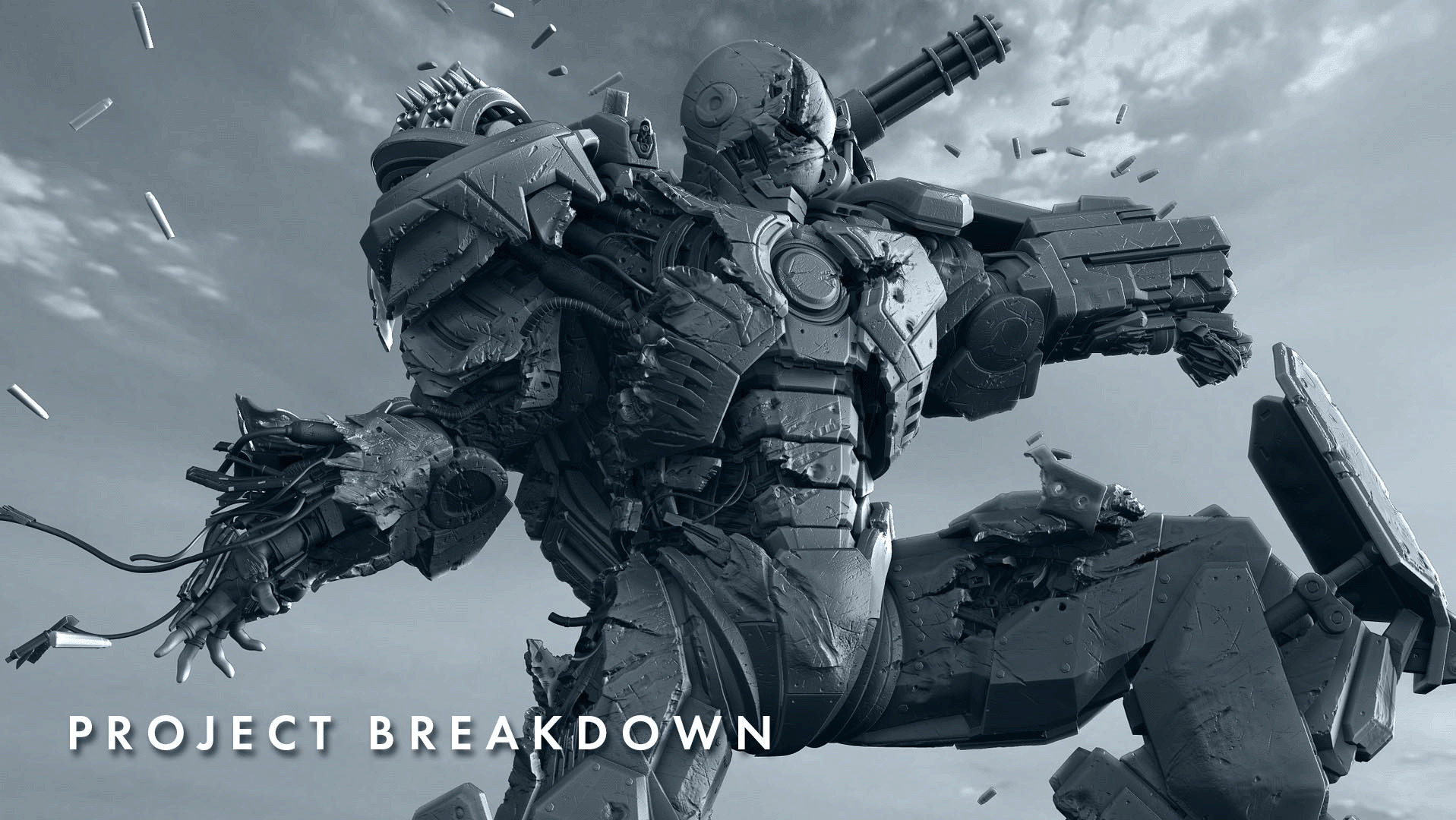
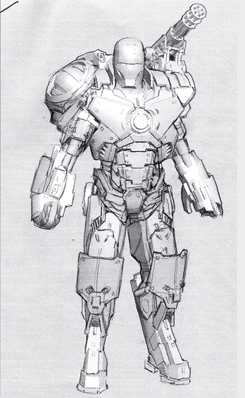
Inspired by the first Iron Man film (2008), I set out to design an MCU-style interpretation of War Machine, a character subtly hinted at in the film. The project focused on three primary design challenges: staying faithful to the iconic shoulder-mounted minigun and missile-launcher configuration from the comics; developing armor plating that felt mechanically plausible and grounded in real-world engineering; and preserving a strong, heroic silhouette.
The aspirational goal of the project was to push my design and technical skills to a level that could stand alongside Marvel Studios’ in-house work.
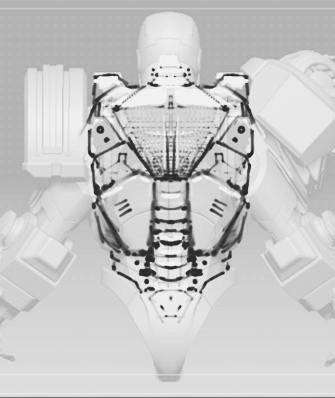
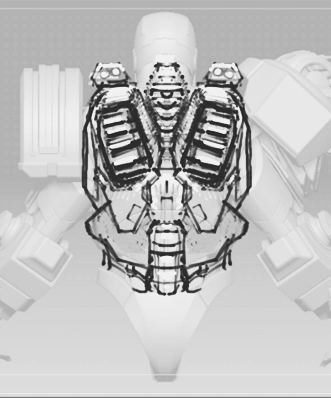
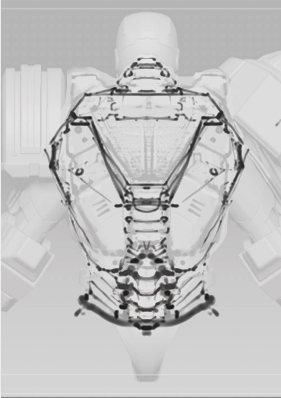
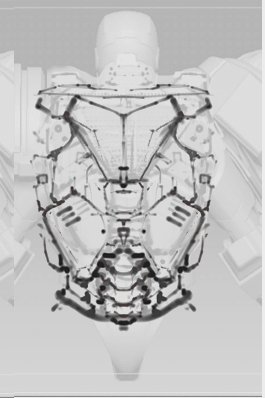
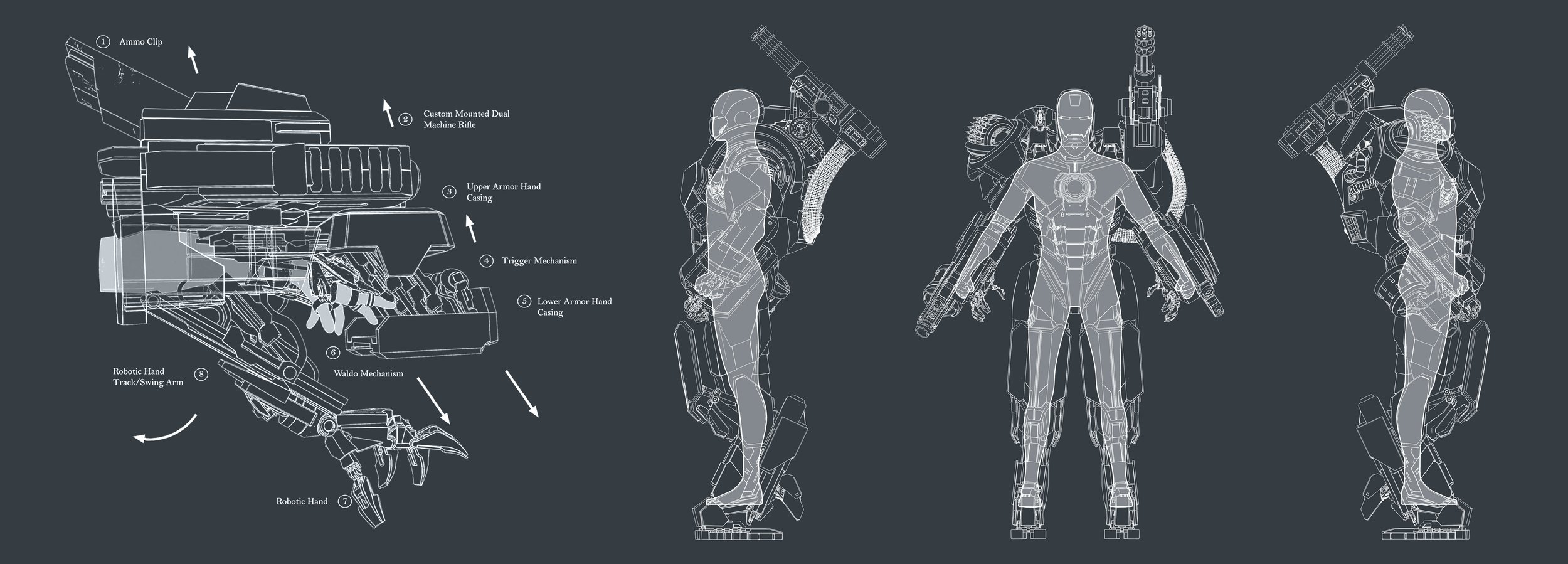
1. ROUGHING OUT THE FORM: 3DS MAX
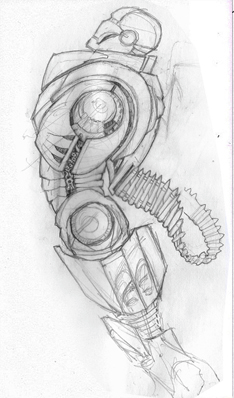
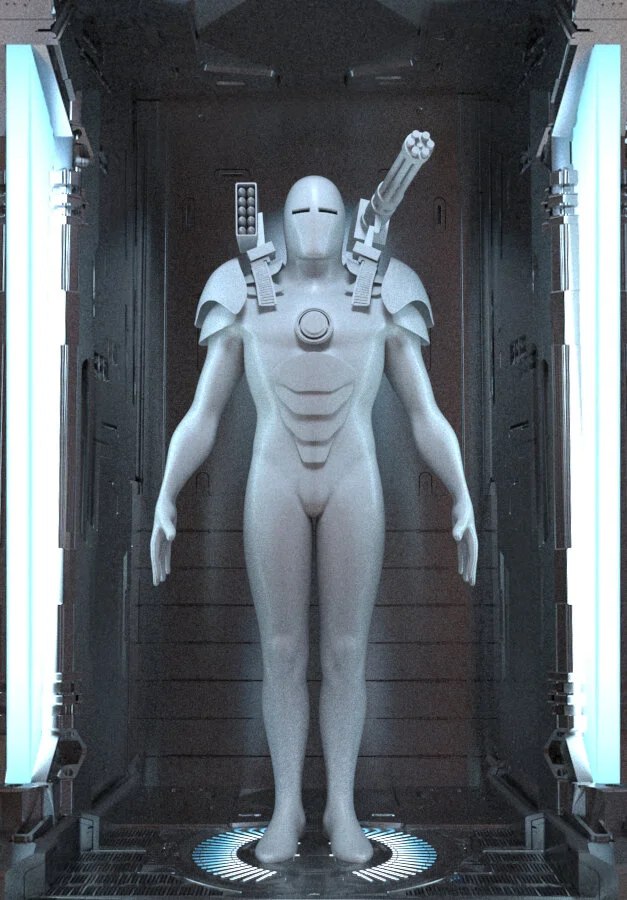
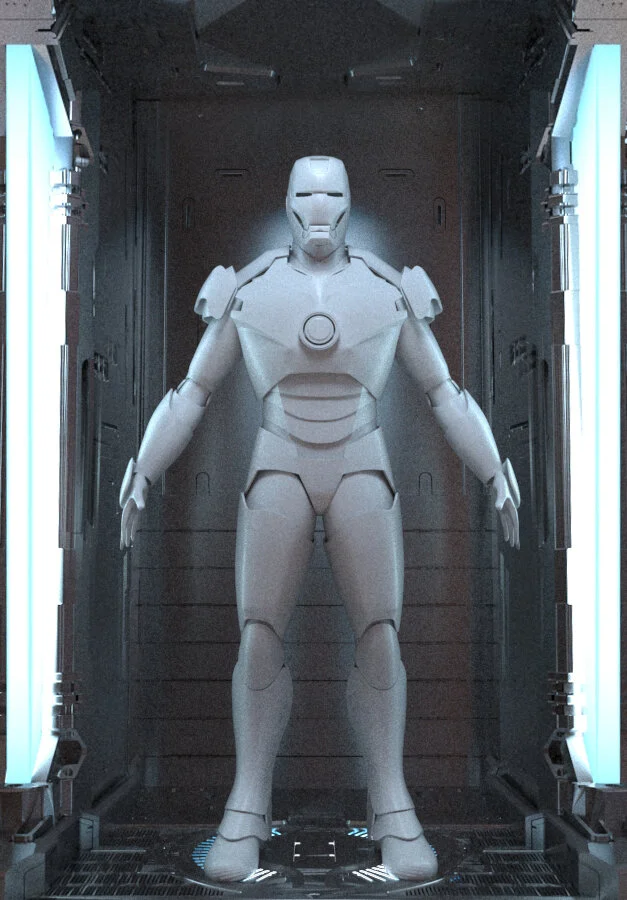
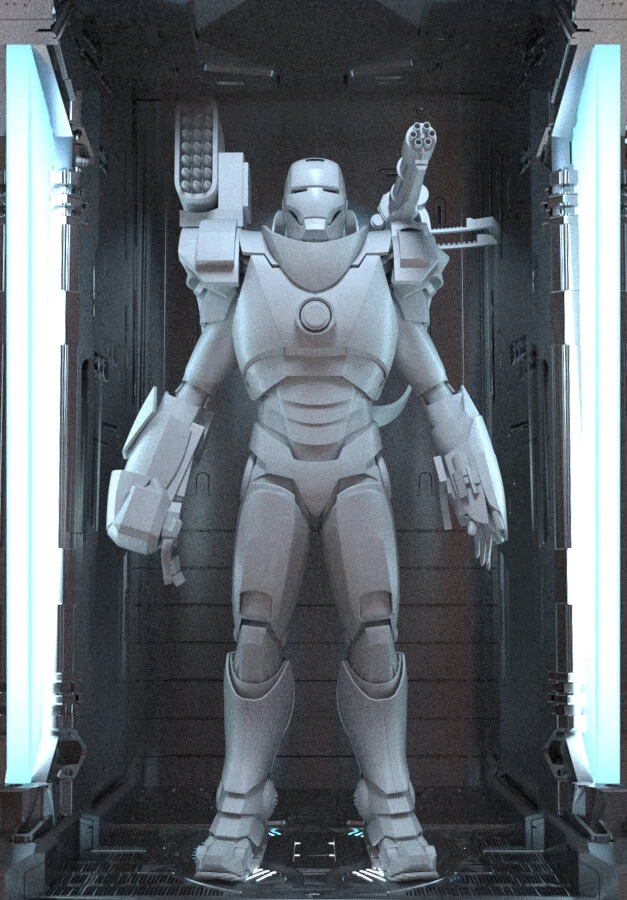
As my first hard-surface modeling project, I developed proper modeling conventions alongside the work itself. I began by roughing in the primary forms, then rigged the armor plates to a 3ds Max biped to test range of motion and layering. This process helped define how each plate could articulate without intersecting the underlying body.
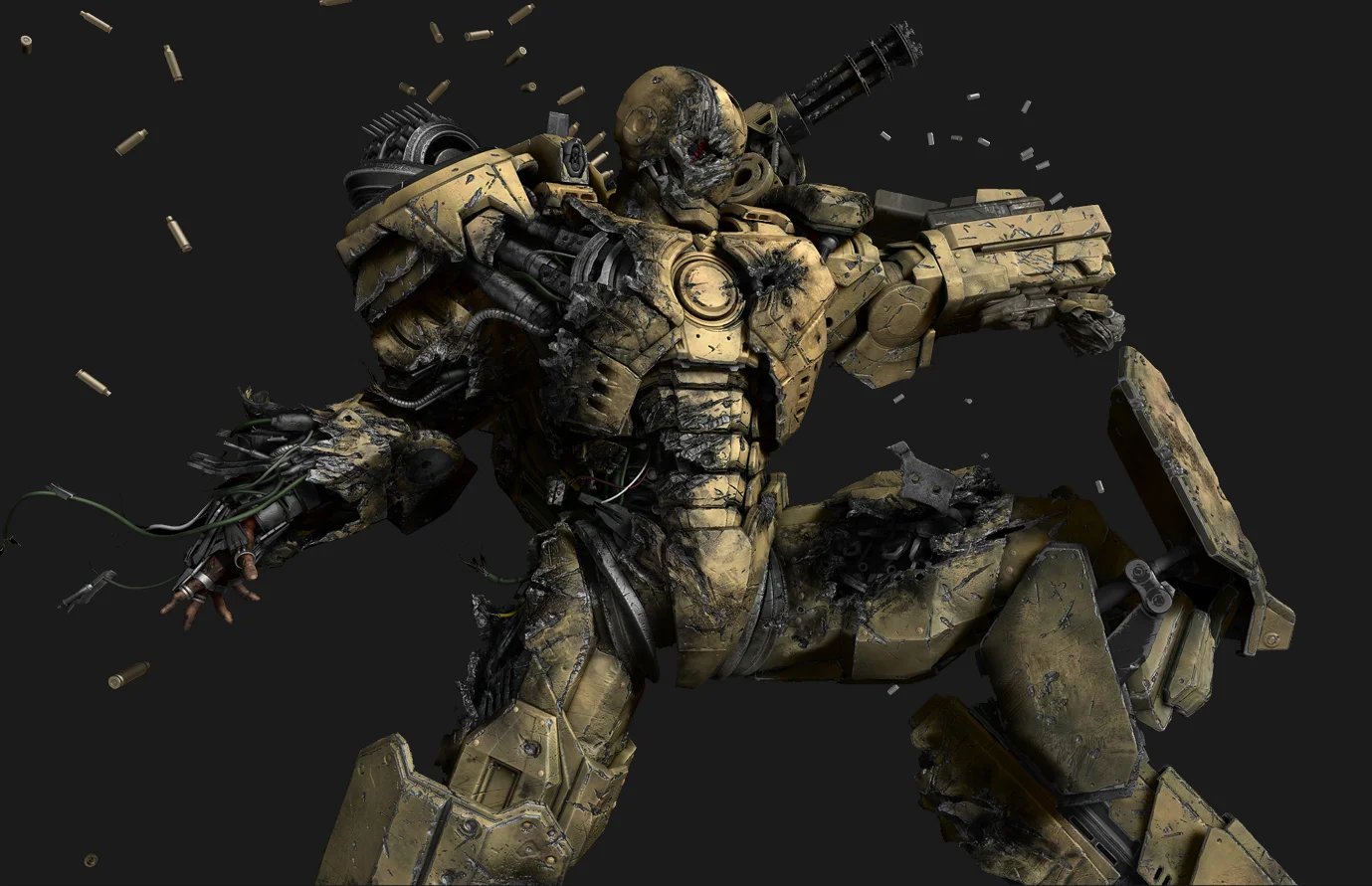
Once the overall armor concept solidified, I shared the work with longtime collaborator and film-industry veteran Yariv Newman. We agreed the strongest presentation would place the character in an action-driven narrative moment. The final pose depicts War Machine atop rocky cliffs in a last stand, with a battle-damaged arm revealing the humanity beneath the machine.
With the base model completed and posed, the workflow transitioned into ZBrush for refinement and detailing.
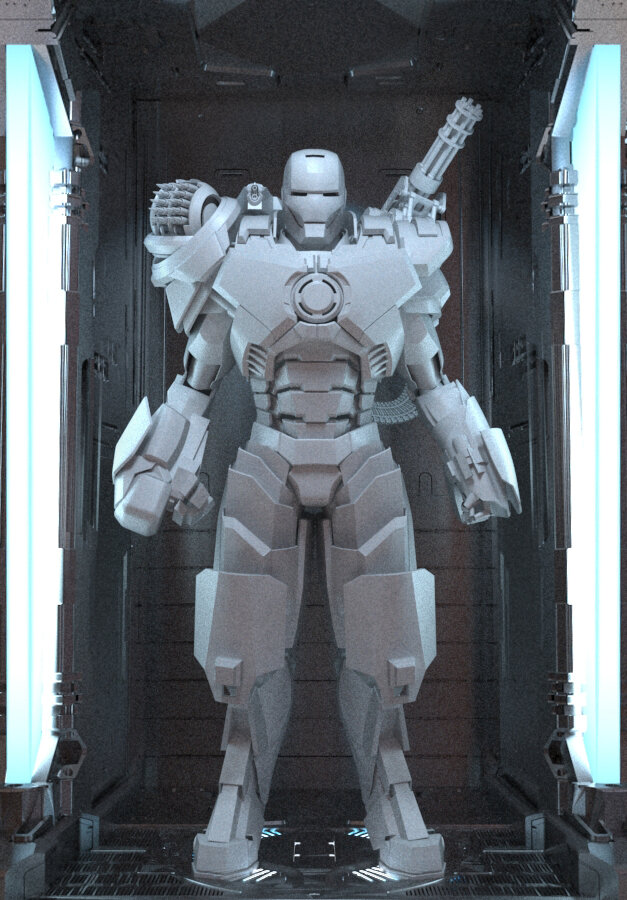
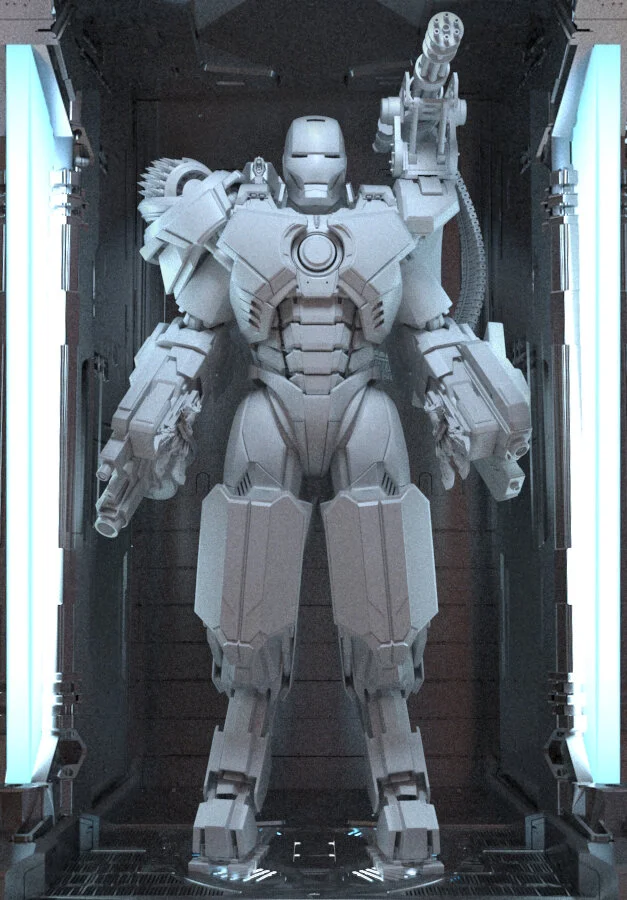
2. STORY AND SCULPT: ZBRUSH
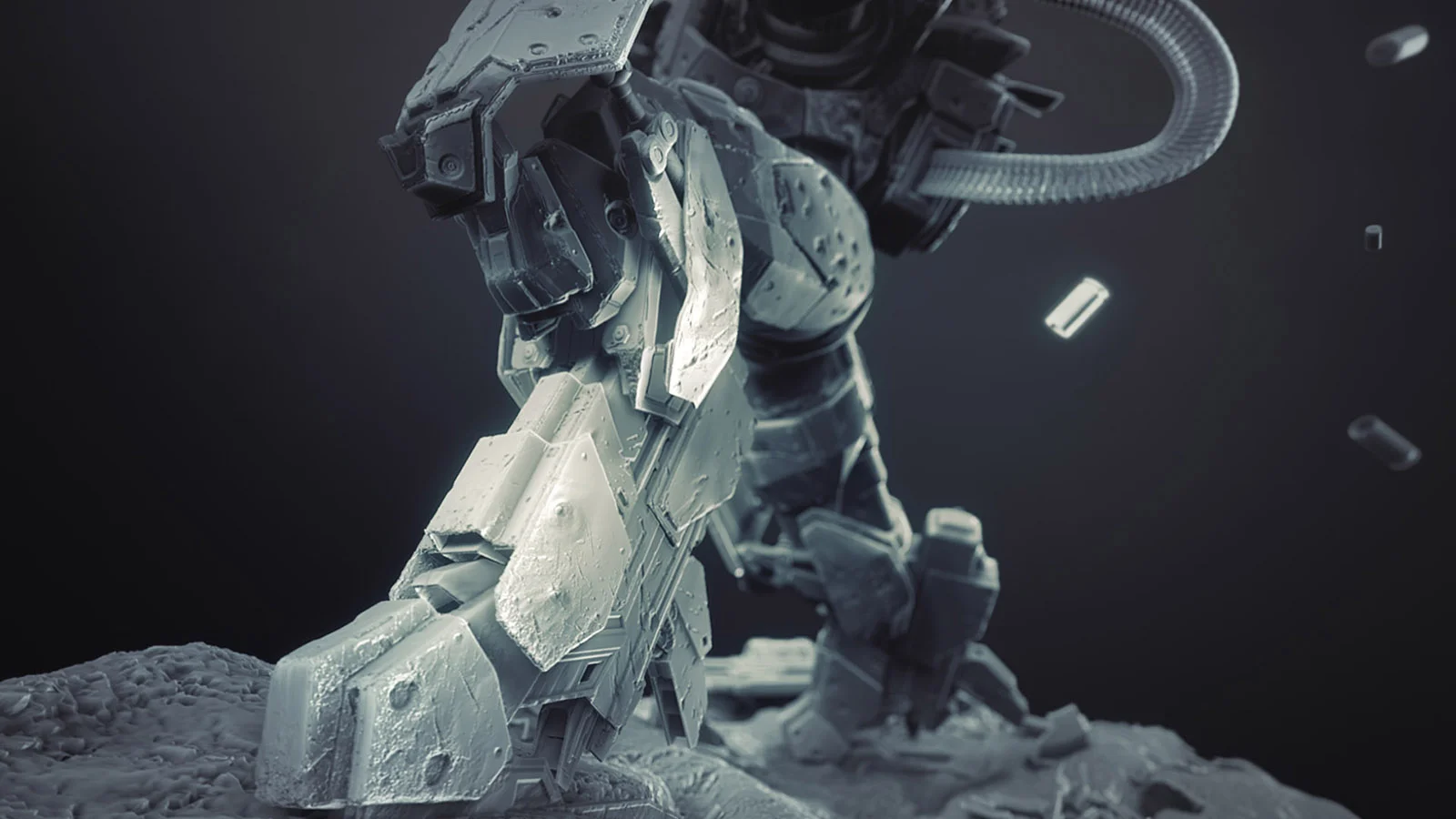
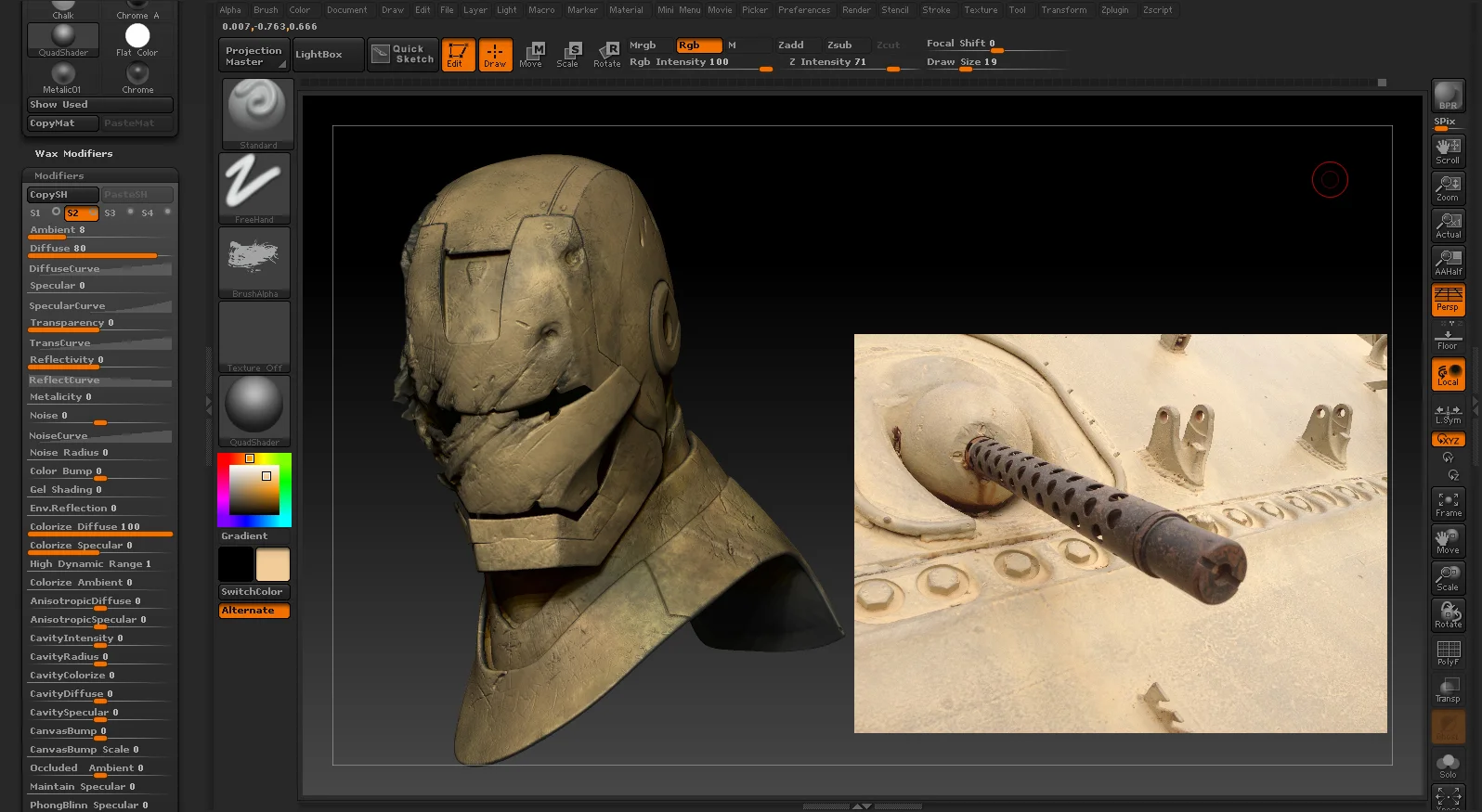
In ZBrush, I sculpted the armor damage by first converting each piece to Dynamesh, allowing for more aggressive deformation and wear. I also refined the proportions and subtly exaggerated the pose to heighten the sense of drama. Once the sculpt was complete, I rebuilt clean, unwrapped SubD versions of each armor component in preparation for poly-painting.
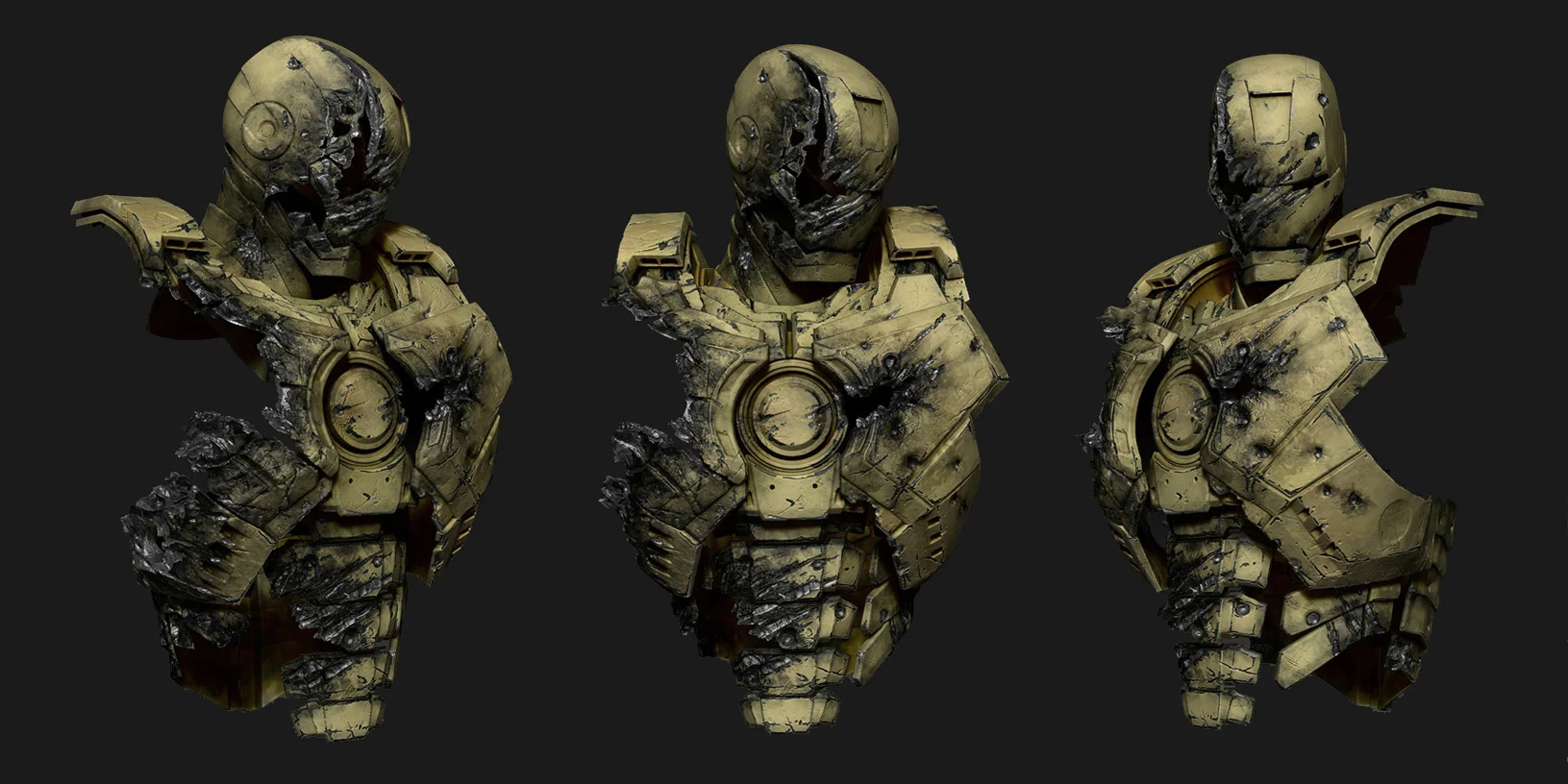
To differentiate this interpretation of War Machine, I explored a desert-warfare camouflage palette. The entire model was poly-painted, during which I learned to leverage ZBrush’s dual and triple shader setups to achieve fine surface details such as paint chipping and edge wear. While BPR test renders were effective for concept visualization, they fell short of the level of realism I was aiming for.
To address this, I optimized the model through decimation and transitioned the asset back into 3ds Max for final rendering in V-Ray.
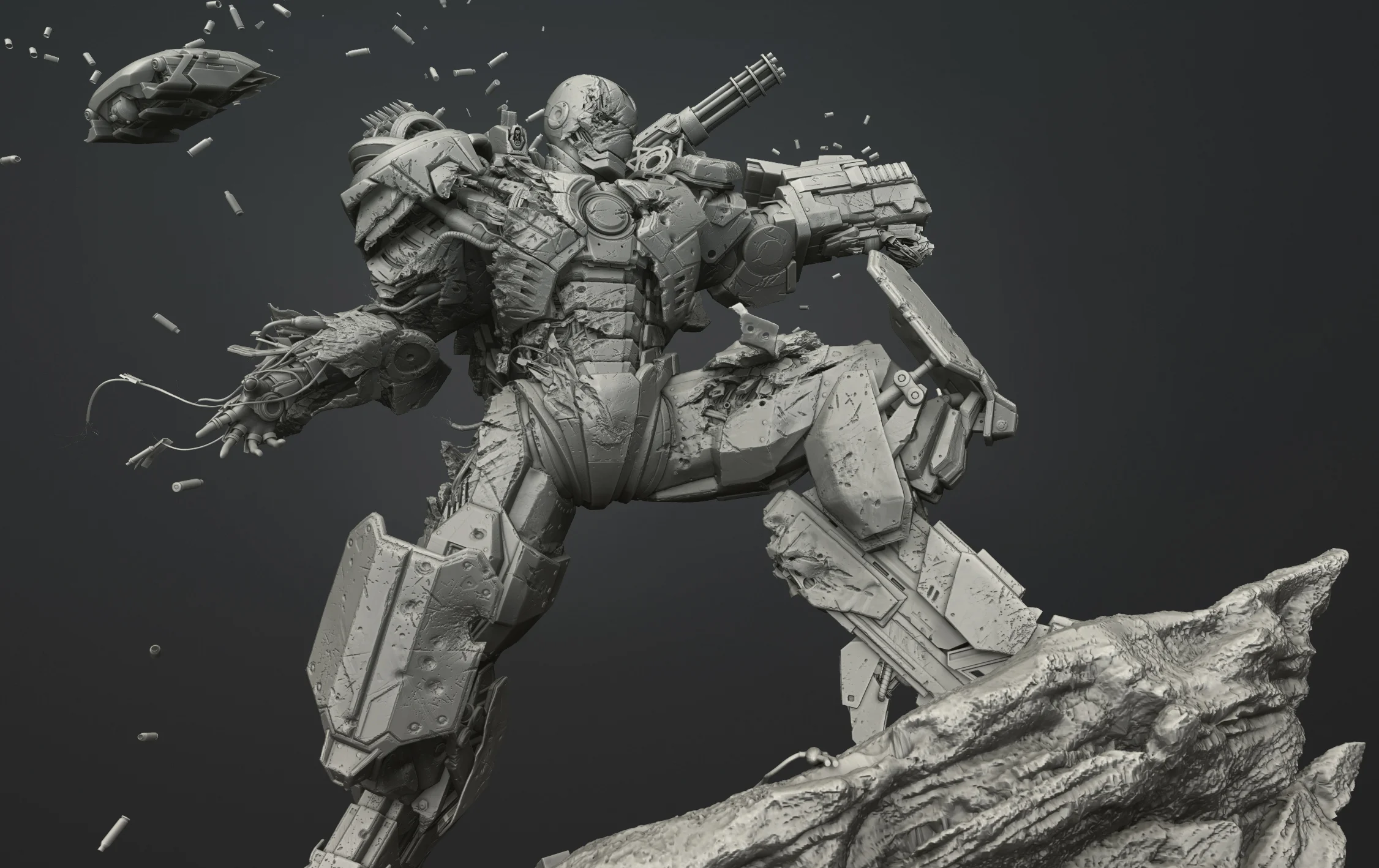
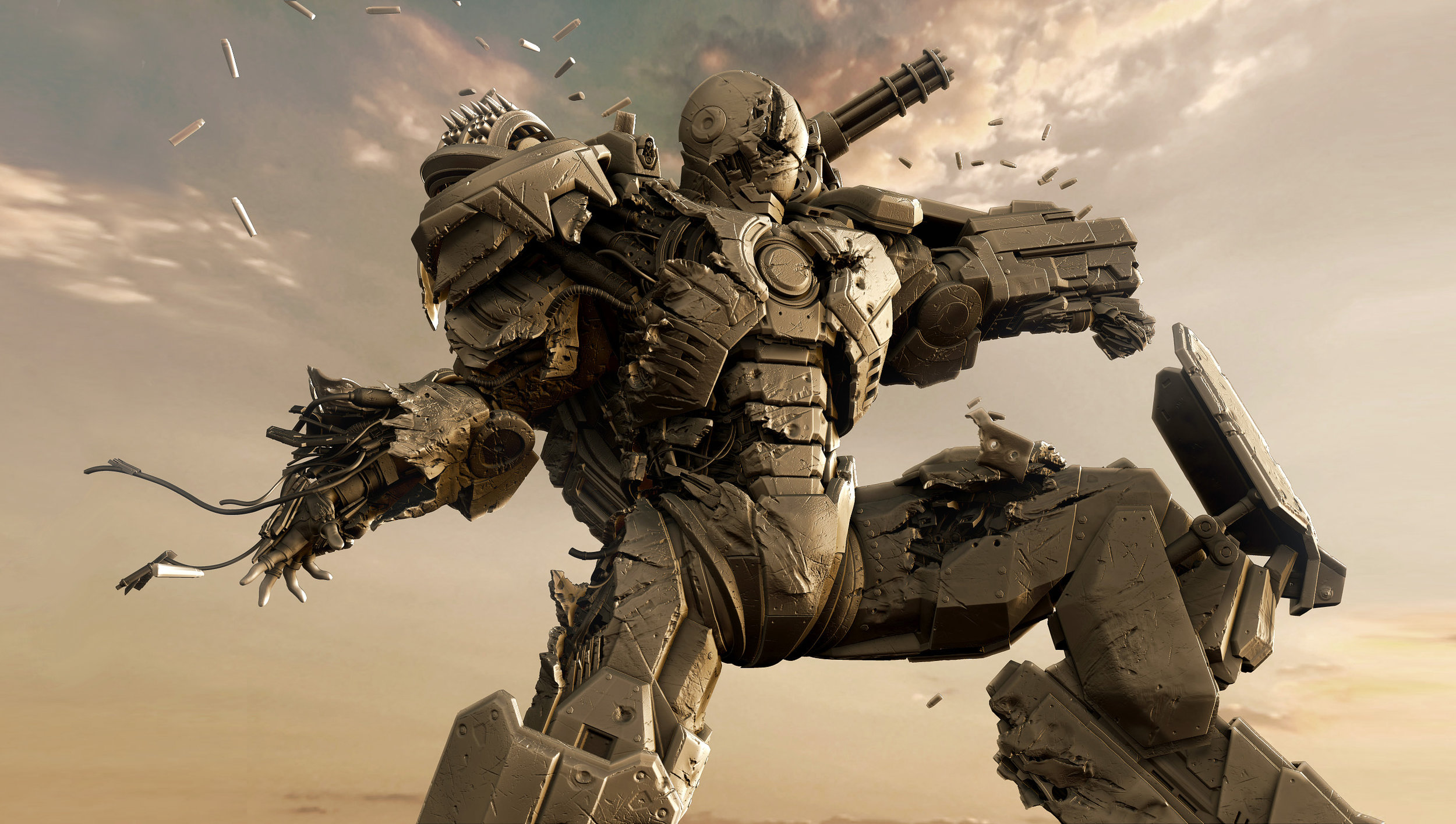
3. REALISM: VRAY EXPERIMENTATION
Back in 3ds Max, I explored a range of HDRI lighting environments and produced several test renders. Ultimately, I felt the strongest presentation would emphasize the intricate mechanical detailing and battle damage rather than rely on environmental context.
As model optimization began to introduce unacceptable detail loss, I shifted direction once more—returning to ZBrush and the full-resolution sculpt to preserve surface fidelity.

4. FINAL ANIMATION AND ZBRUSH TUTORIAL
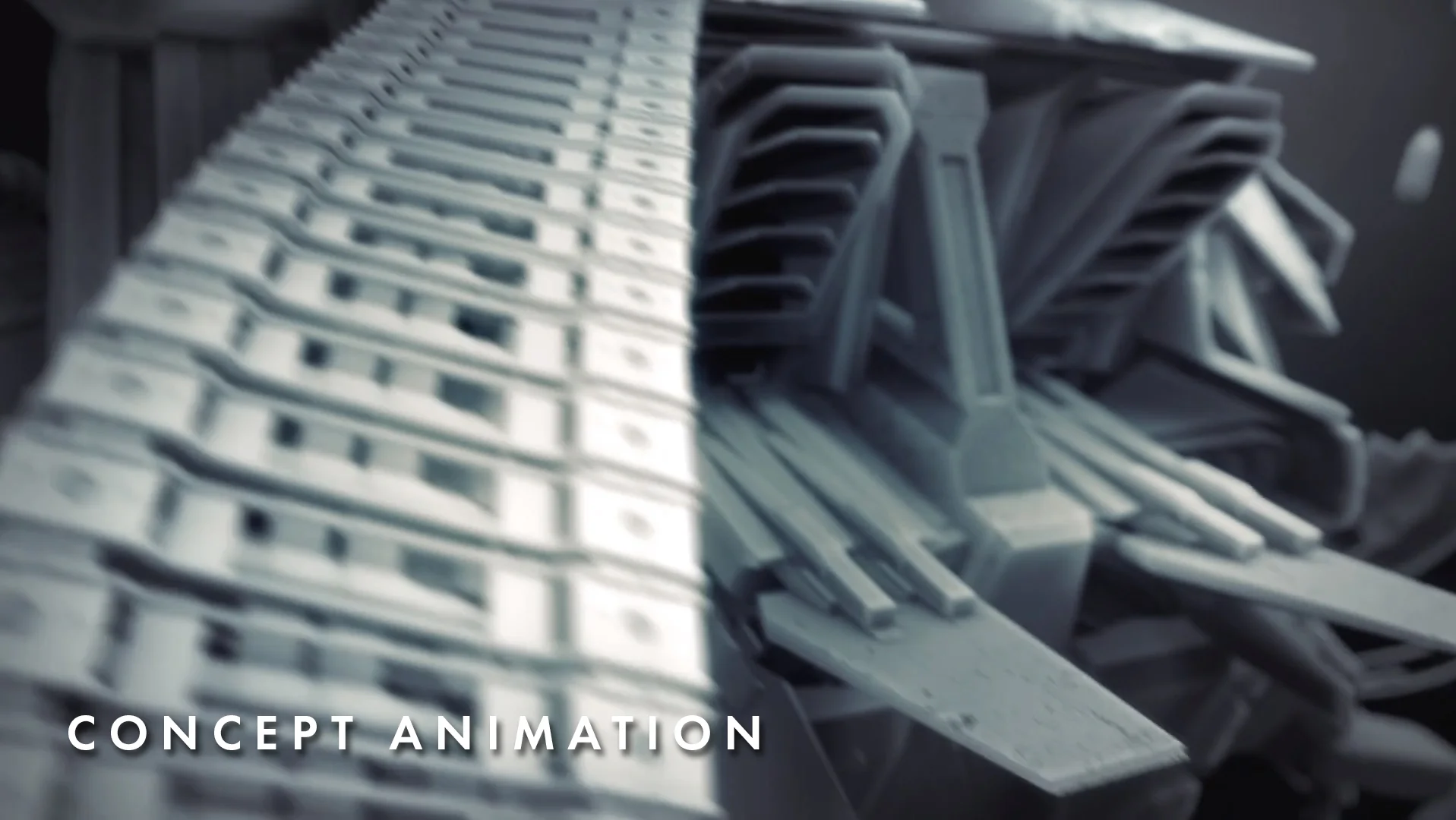
Using ZBrush’s timeline and viewport keyframing tools, I generated animated camera shots by rendering high-quality BPR image sequences. After light compositing and polish in After Effects, the concept animation was completed and prepared for release on ZBrushCentral.
To give back to the community that provided guidance and feedback throughout the project, I also produced a detailed mini-tutorial outlining my process and made all project files available for free download.

5. RESPONSE
The results of this project exceeded my expectations. The War Machine gained widespread traction within the CG community and was awarded Zbrush Central’s Top Row Gallery honors. To date, the model has been downloaded over a thousand times, including by numerous 3D print artists who have gone on to produce impressive full-scale physical prints. The project was also featured in CG trade publications Digital Production and 3D World Magazine.
The most meaningful validation came when the work caught the attention of the team at Perception VFX in New York City, leading to my first feature-film opportunity on Avengers: Age of Ultron. Working alongside ZBrush artist Casey Rueter, I contributed to the film’s main-on-end titles.